Wellness I
Complete Wellness · 4-week program · 12 exercises
Printed 9/14/2026
1. Head Retraction
Purpose: Increase neck strength and muscular endurance.
Benefit: Improved stability, functional strength and injury prevention.
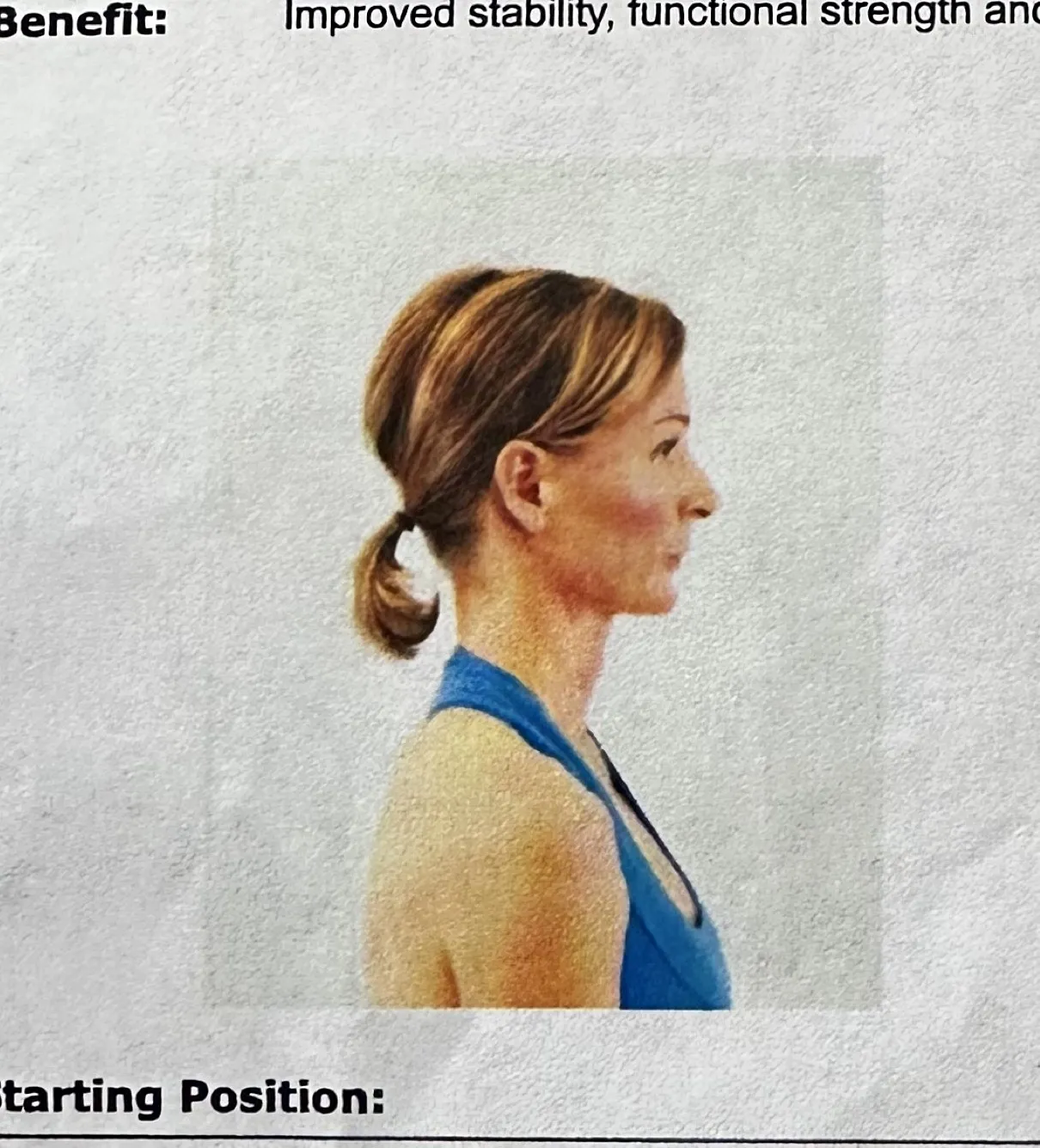
Starting position
Begin seated, or standing, looking forward with shoulders back with good neutral posture.
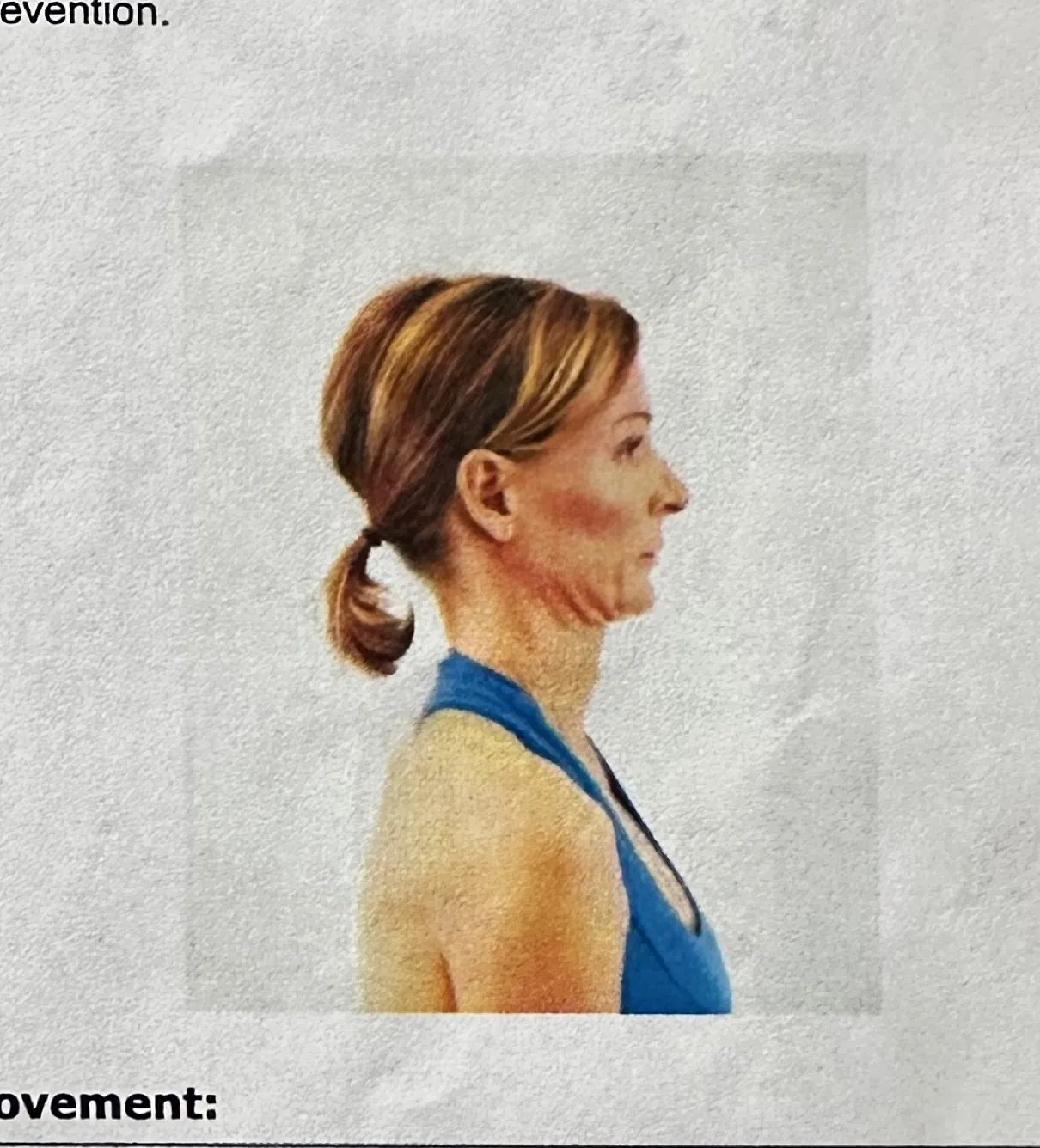
Movement
Activate core muscles. Attempt to draw head directly backwards. Maintain level head position. Do not tilt head up or down. Hold for two seconds. Return to start position and repeat for prescribed repetitions and sets.
If you experience an exacerbation or have a change in medical condition, promptly seek appropriate medical advice.
| Sets | Reps | Hold | Rest | Frequency |
|---|---|---|---|---|
| 3 | 10 | — | 30 sec | 3x/week |
2. Bilateral External Rotation with Scapular Retraction
Purpose: Increase neck strength and muscular endurance.
Benefit: Improved stability, functional strength and injury prevention.
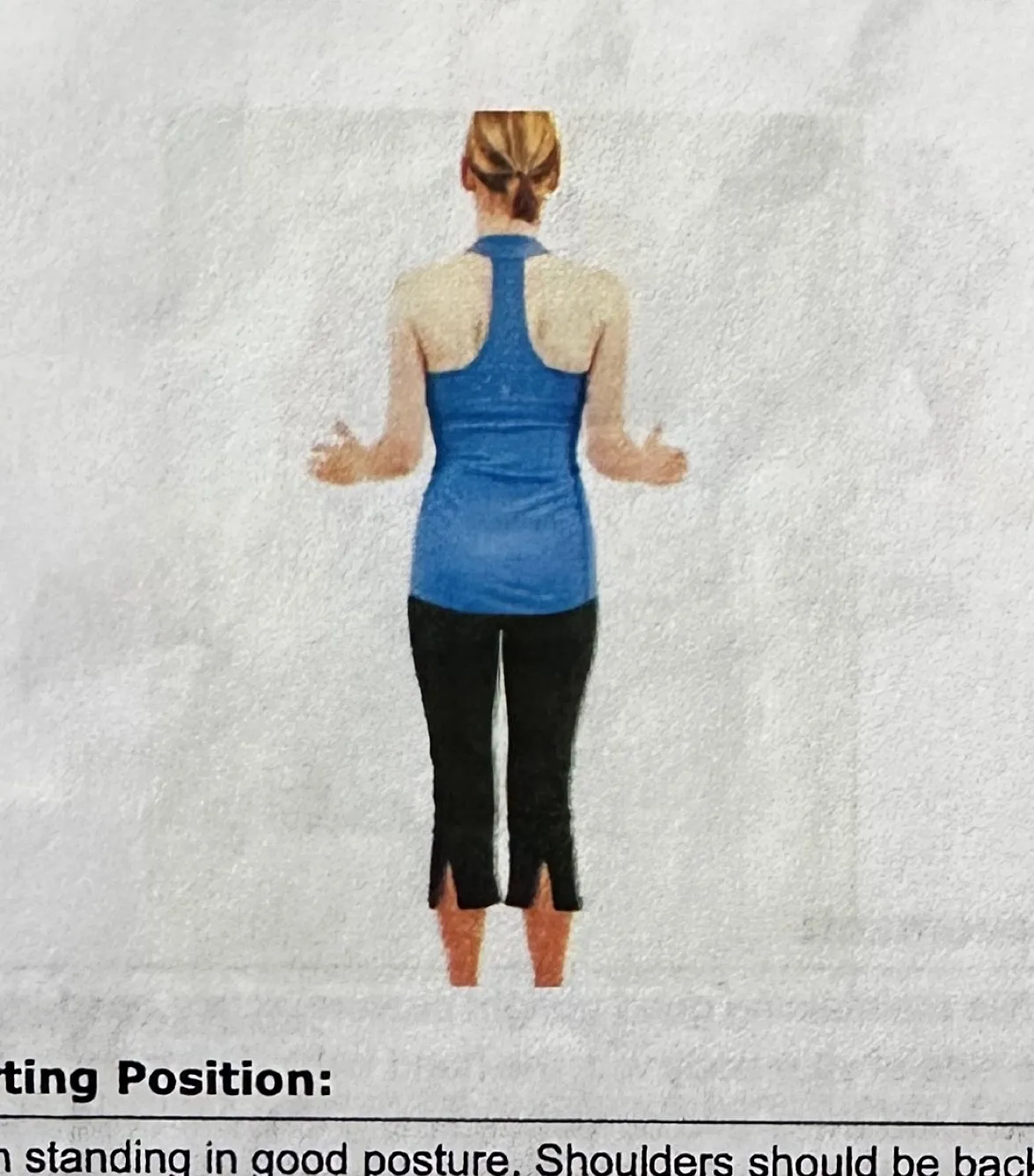
Starting position
Begin standing in good posture. Shoulders should be back and head up. Bend elbows to 90 degrees and keep elbows near sides.
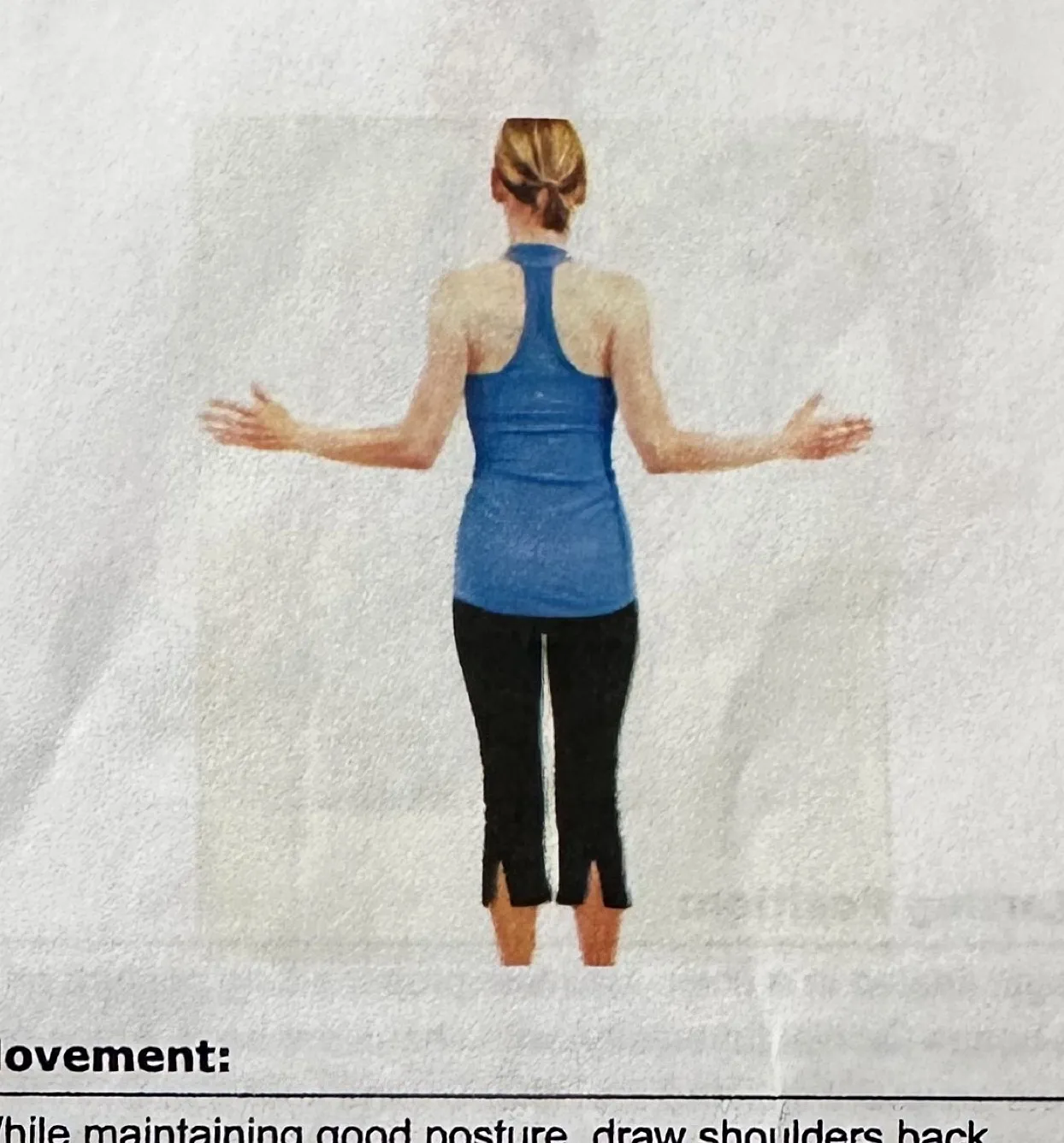
Movement
While maintaining good posture, draw shoulders back, squeezing shoulder blades together. A stretch may be felt in the chest and front of shoulder. Do not allow shoulders to raise upward. Hold for 5–10 seconds. Repeat for prescribed sets and repetitions.
If you experience an exacerbation or have a change in medical condition, promptly seek appropriate medical advice.
| Sets | Reps | Hold | Rest | Frequency |
|---|---|---|---|---|
| 3 | 10 | — | 30 sec | 3x/week |
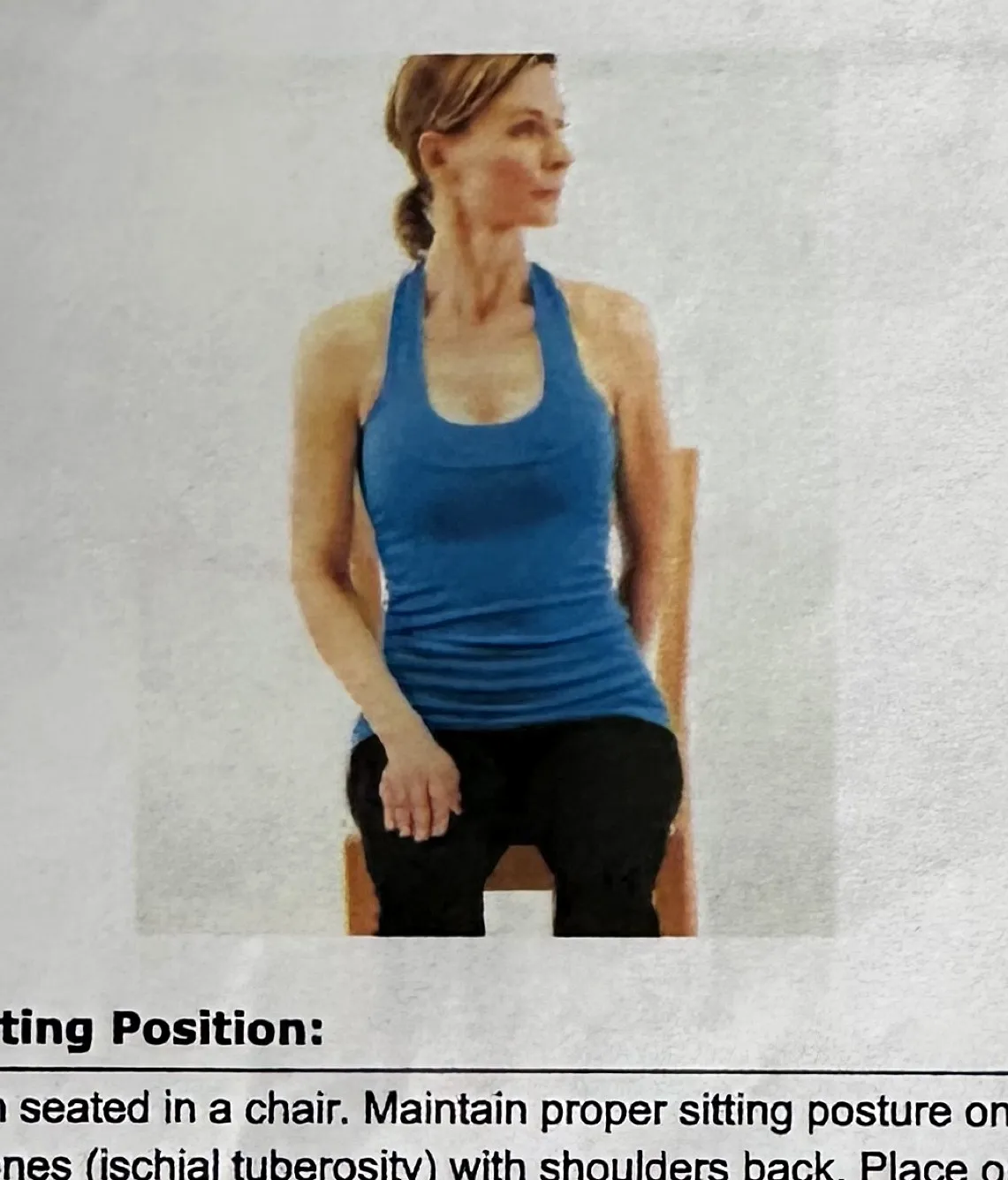
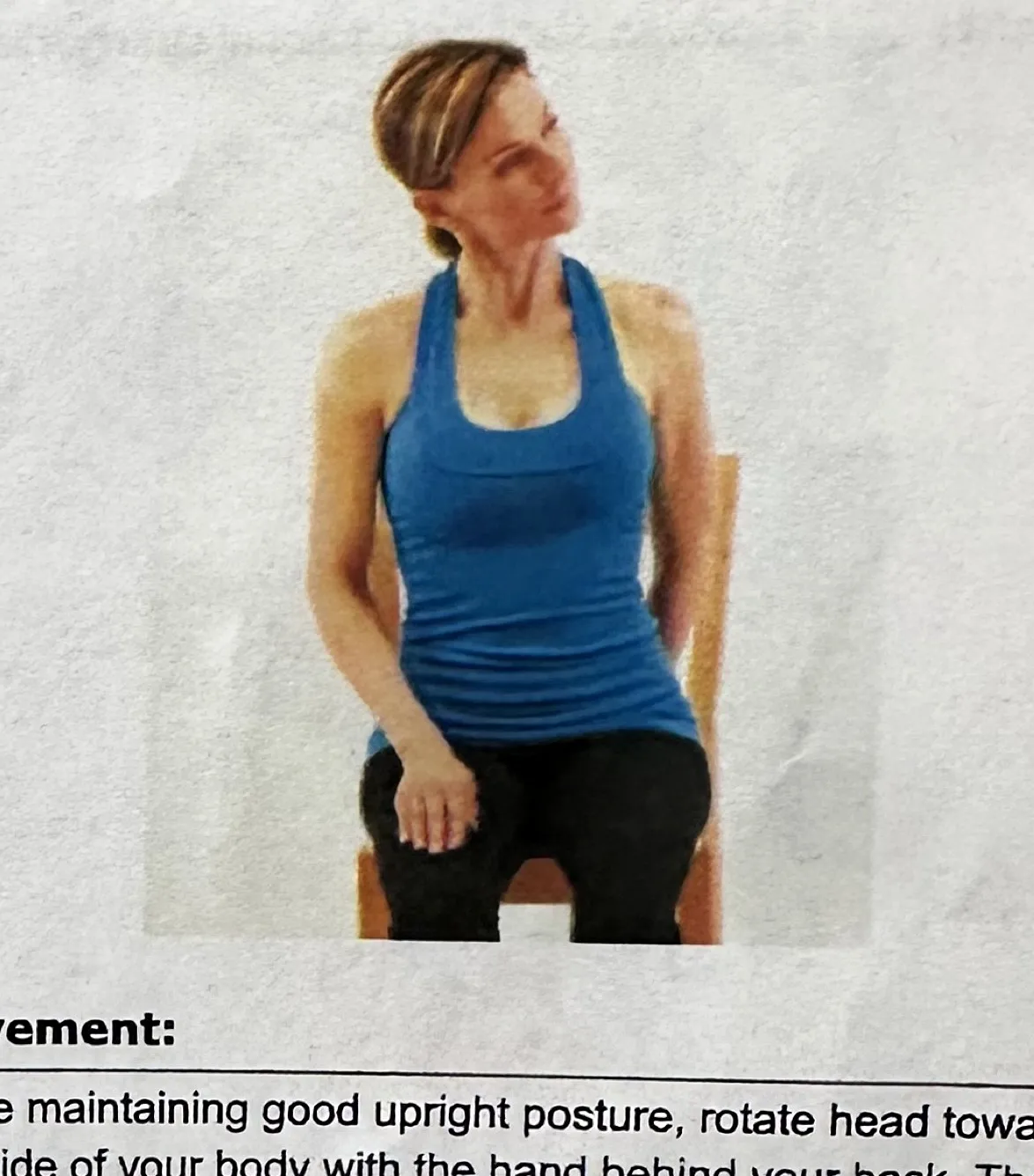
3. Levator Scapula Stretch
Purpose: Correct neck imbalances and restore function.
Benefit: Increases flexibility, improves joint range of motion, and improves circulation.
Starting position
Begin seated in a chair. Maintain proper sitting posture on sit-bones (ischial tuberosity) with shoulders back. Place one hand on your thigh and the other behind your back.
Movement
While maintaining good upright posture, rotate head towards the side of your body with the hand behind your back. Then lean head away and down, attempting to lower opposite ear to back of hand on thigh. A gentle stretch should be felt in upper trapezius and neck. Hold for 20–30 seconds. Repeat for prescribed repetitions and sets. Alternate sides as directed.
If you experience an exacerbation or have a change in medical condition, promptly seek appropriate medical advice.
| Sets | Reps | Hold | Rest | Frequency |
|---|---|---|---|---|
| 1 | 3 | 30 sec | — | 3x/week |
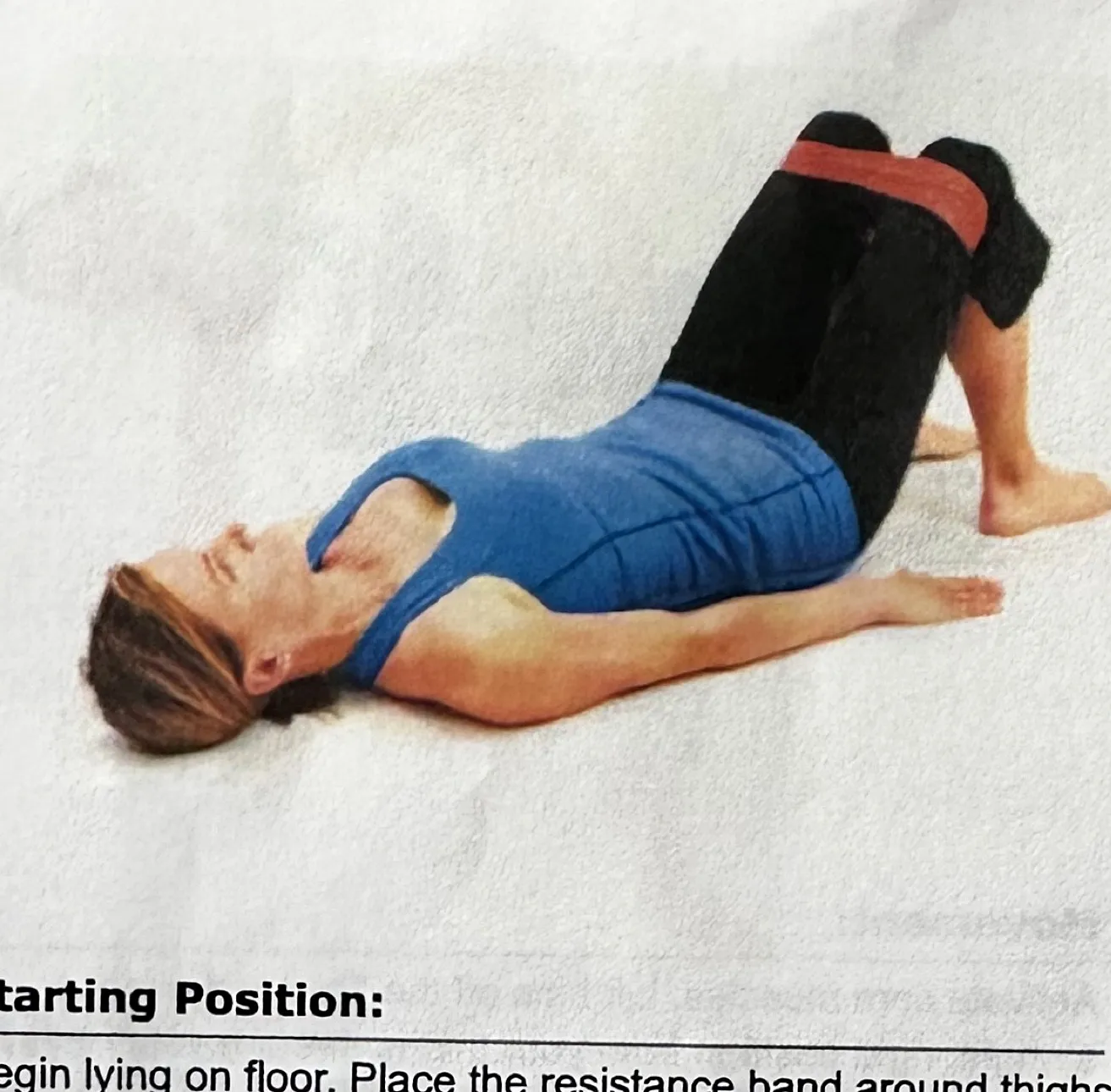
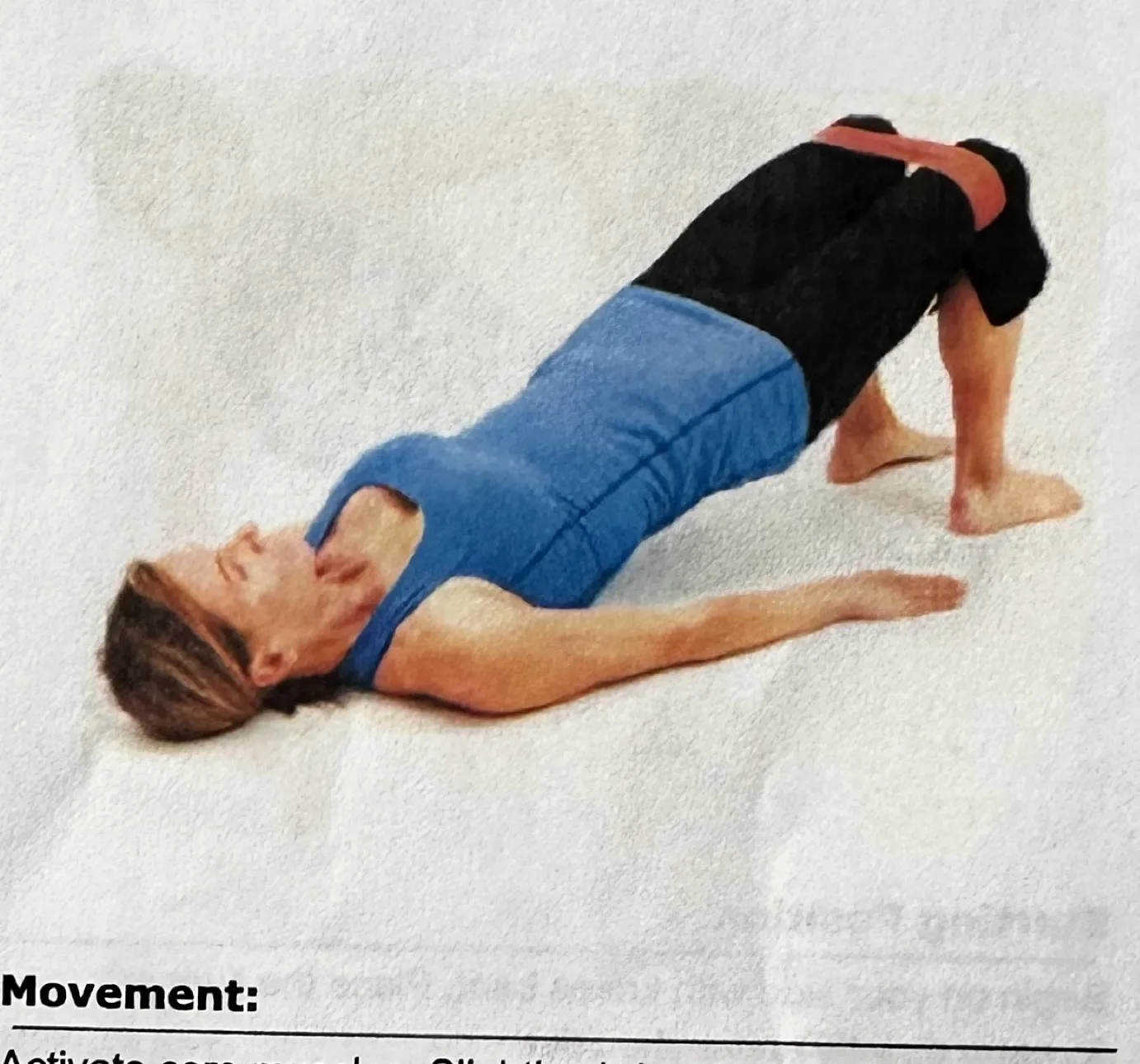
4. Hip Bridge with Theraband
Purpose: Increase hip strength and muscular endurance.
Benefit: Improved stability, functional strength and injury prevention.
Starting position
Begin lying on floor. Place the resistance band around thighs just above knees. Bend knees with feet flat on floor, arms extended to sides.
Movement
Activate core muscles. Slightly abduct legs while simultaneously performing a hip bridge, attempting to attain shoulder, hip and knee alignment. Slowly lower yourself to start position without bringing knees together. Repeat for prescribed repetitions and sets.
If you experience an exacerbation or have a change in medical condition, promptly seek appropriate medical advice.
| Sets | Reps | Hold | Rest | Frequency |
|---|---|---|---|---|
| 3 | 10 | — | 30 sec | 3x/week |
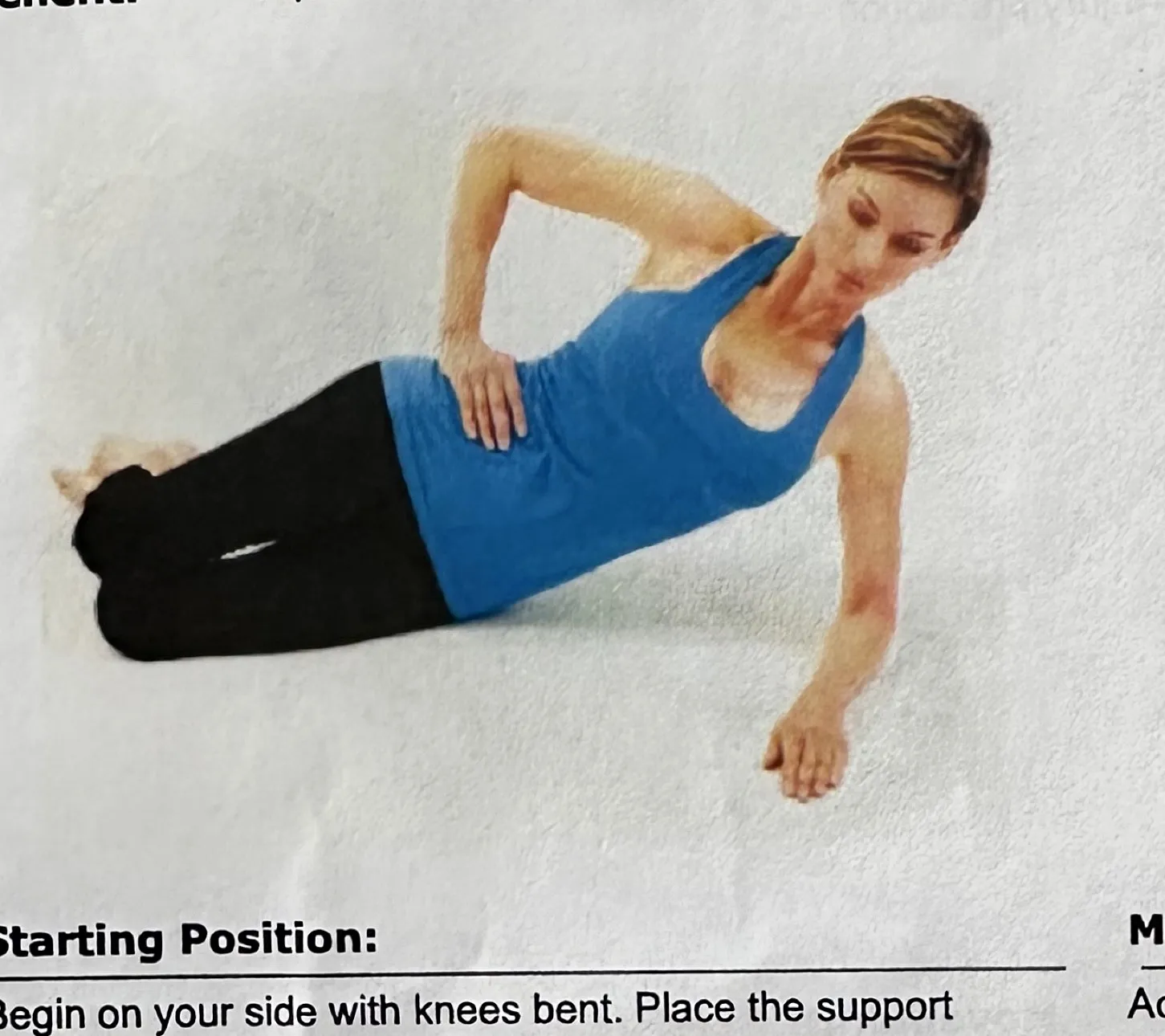
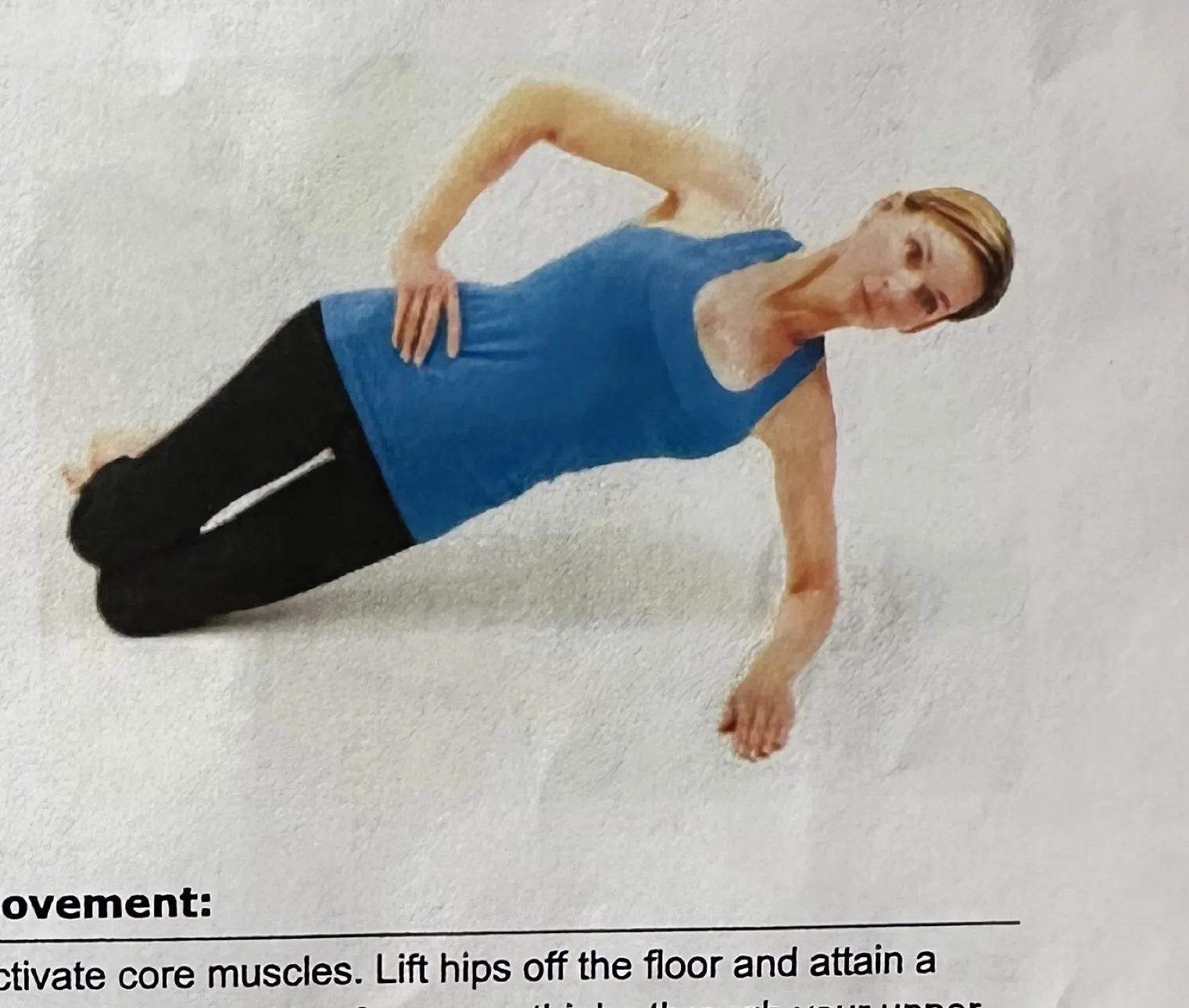
5. Modified Side Plank
Purpose: Increase core strength and muscular endurance.
Benefit: Improved stability, functional strength and injury prevention.
Starting position
Begin on your side with knees bent. Place the support forearm directly under shoulder.
Movement
Activate core muscles. Lift hips off the floor and attain a straight, rigid position from your thighs through your upper body. Once in this position, there should be no movement. Maintain core contraction. Hold for recommended duration. Repeat for prescribed repetitions and sets. Perform on opposite side.
If you experience an exacerbation or have a change in medical condition, promptly seek appropriate medical advice.
| Sets | Reps | Hold | Rest | Frequency |
|---|---|---|---|---|
| 1 | 3 | 30 sec | 30 sec | 3x/week |
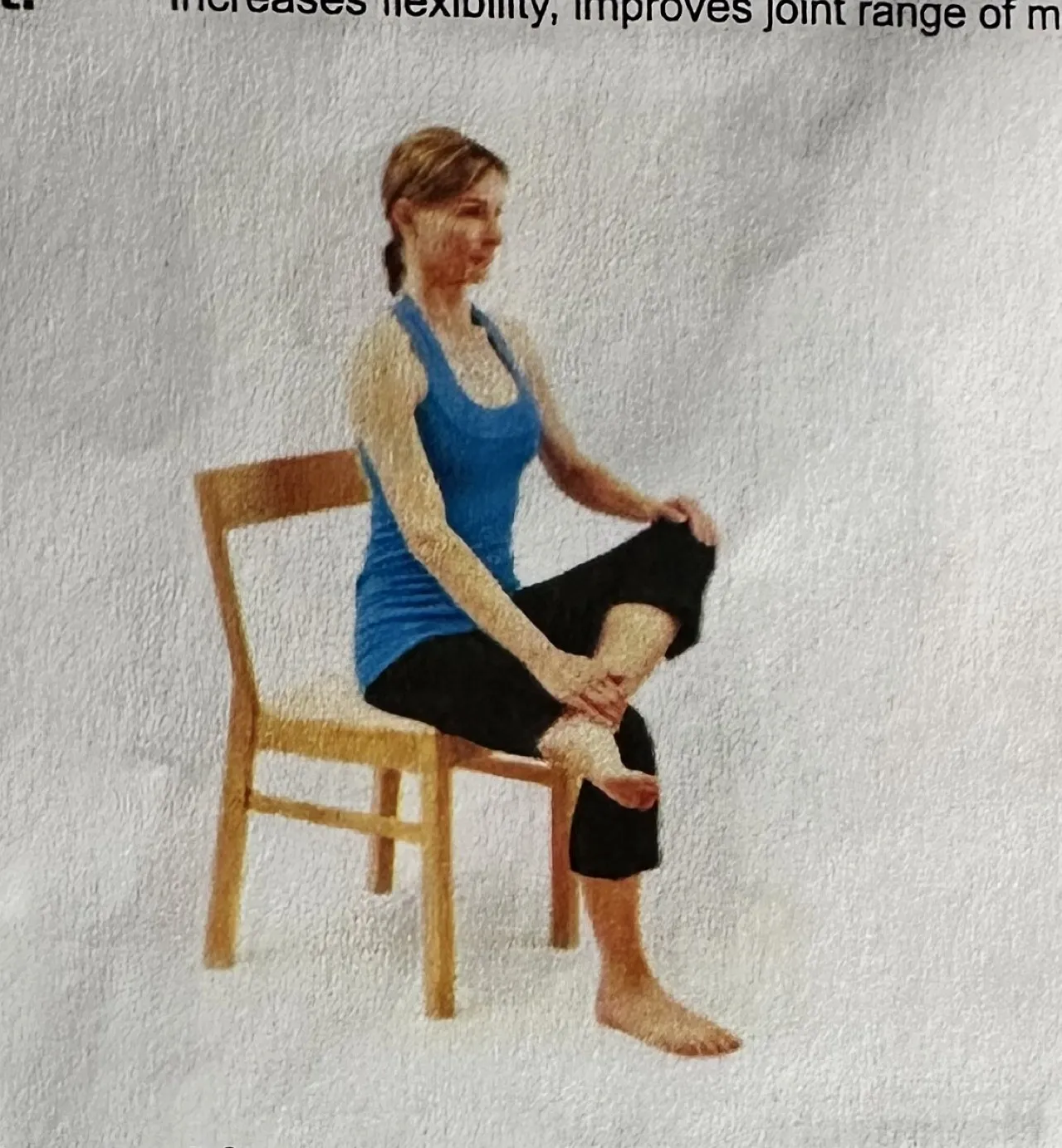
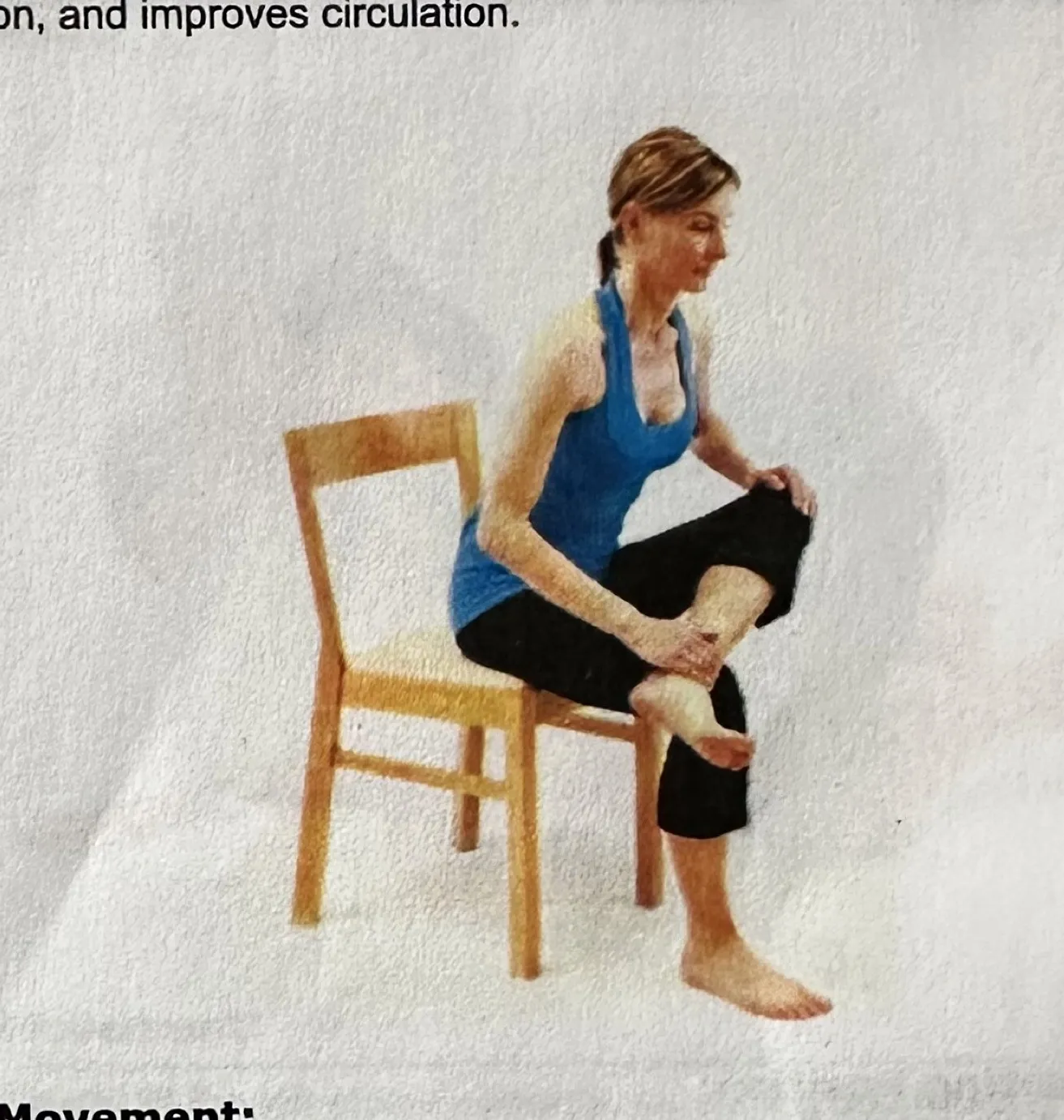
6. Seated Figure 4 Stretch
Purpose: Correct hip imbalances and restore function.
Benefit: Increases flexibility, improves joint range of motion, and improves circulation.
Starting position
Begin sitting with a straight neutral spine. Cross one leg over other, placing ankle on opposite thigh above knee.
Movement
Slowly lower chest down toward knees trying to keep a flat low back. A stretch in hip of crossed leg should be felt. Hold for 20–30 seconds and repeat for prescribed repetitions. Alternate sides as directed.
If you experience an exacerbation or have a change in medical condition, promptly seek appropriate medical advice.
| Sets | Reps | Hold | Rest | Frequency |
|---|---|---|---|---|
| 1 | 3 | 30 sec | — | 3x/week |
7. Seiza Poser
Purpose: Correct imbalances and restore function.
Benefit: Increases flexibility and improves joint range of motion.
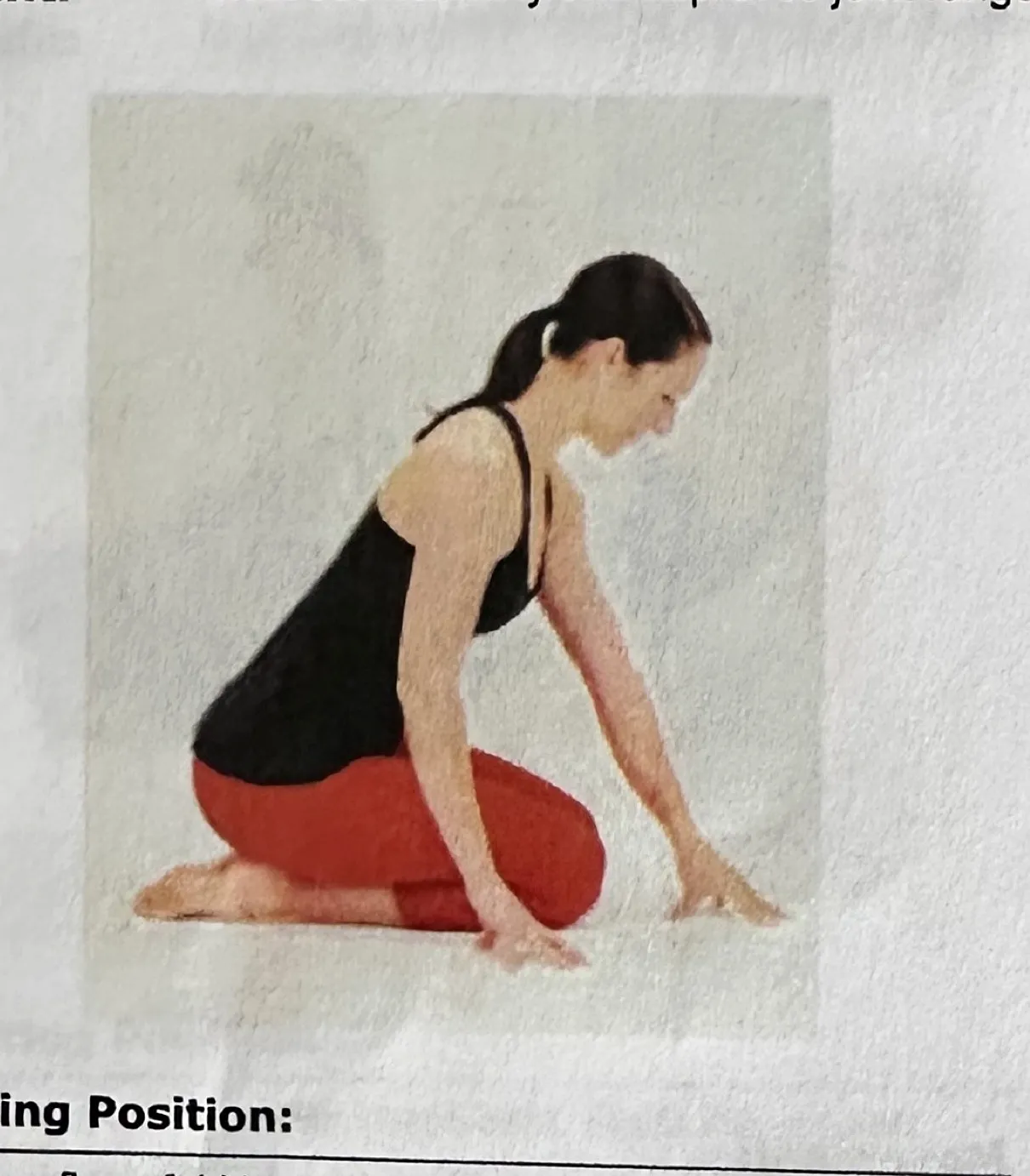
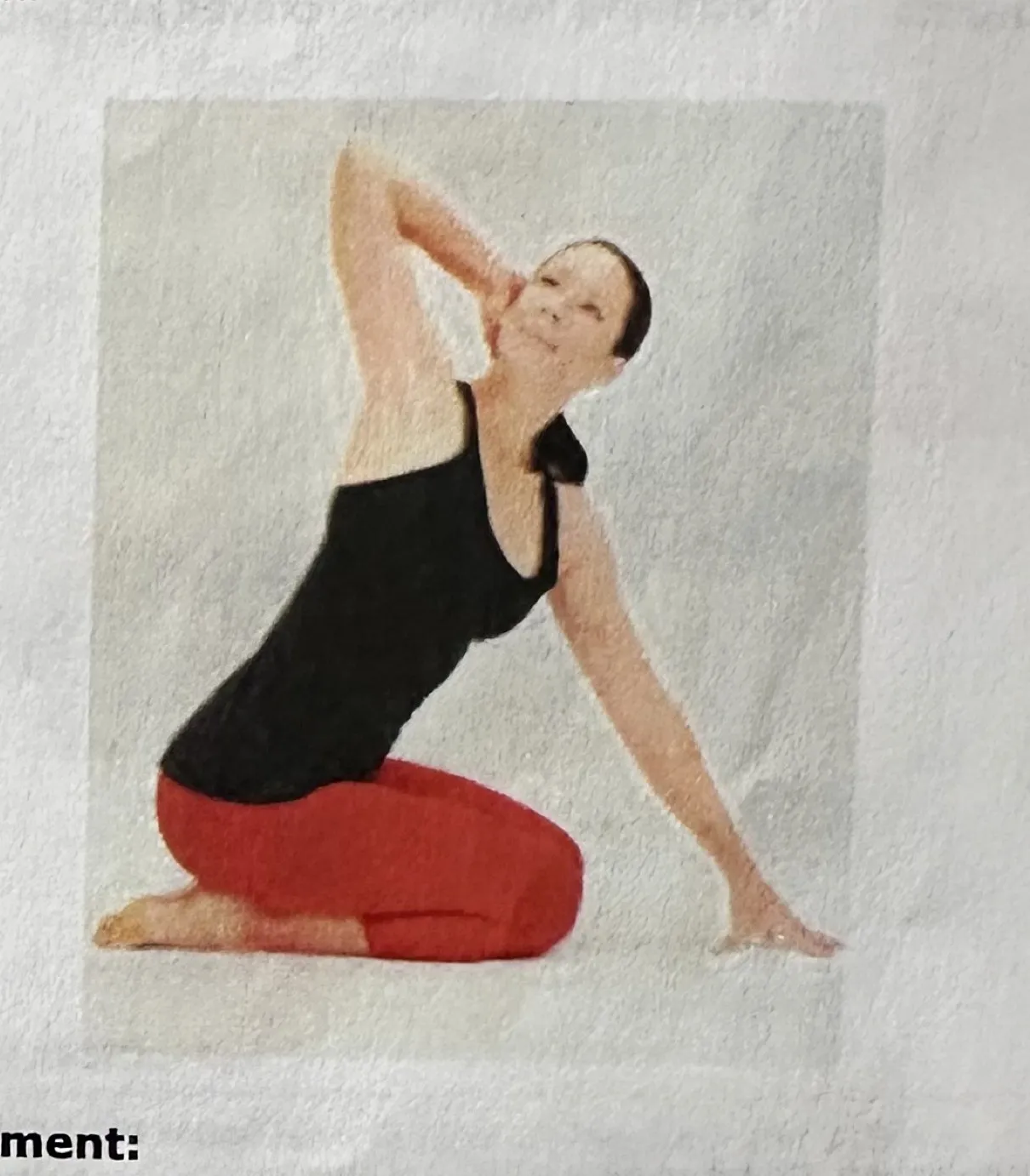
Starting position
Kneel on floor, fold legs underneath thighs while resting buttocks on the heels. One hand contacting the ground in front of the body and one hand behind the head.
Movement
Move the elbow outward and backward, then follow with line of sight and head, turning head to the same direction. Repeat prescribed number of repetitions before switching sides.
If you experience an exacerbation or have a change in medical condition, promptly seek appropriate medical advice.
| Sets | Reps | Hold | Rest | Frequency |
|---|---|---|---|---|
| 1 | 3 | 30 sec | — | Daily |
8. Quadruped Mid Back Mobility
Purpose: Correct imbalances and restore function.
Benefit: Increases flexibility and improves joint range of motion.
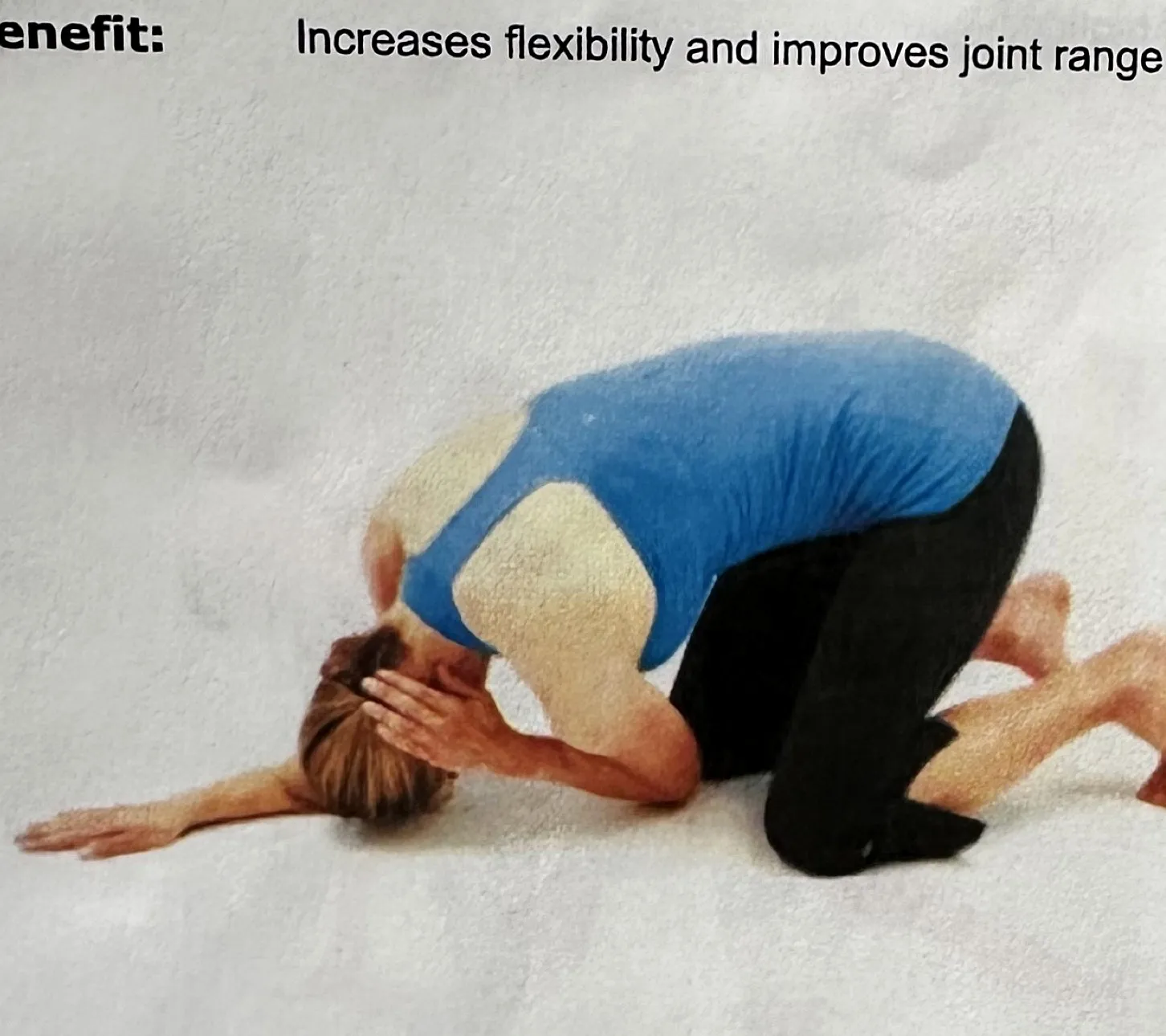
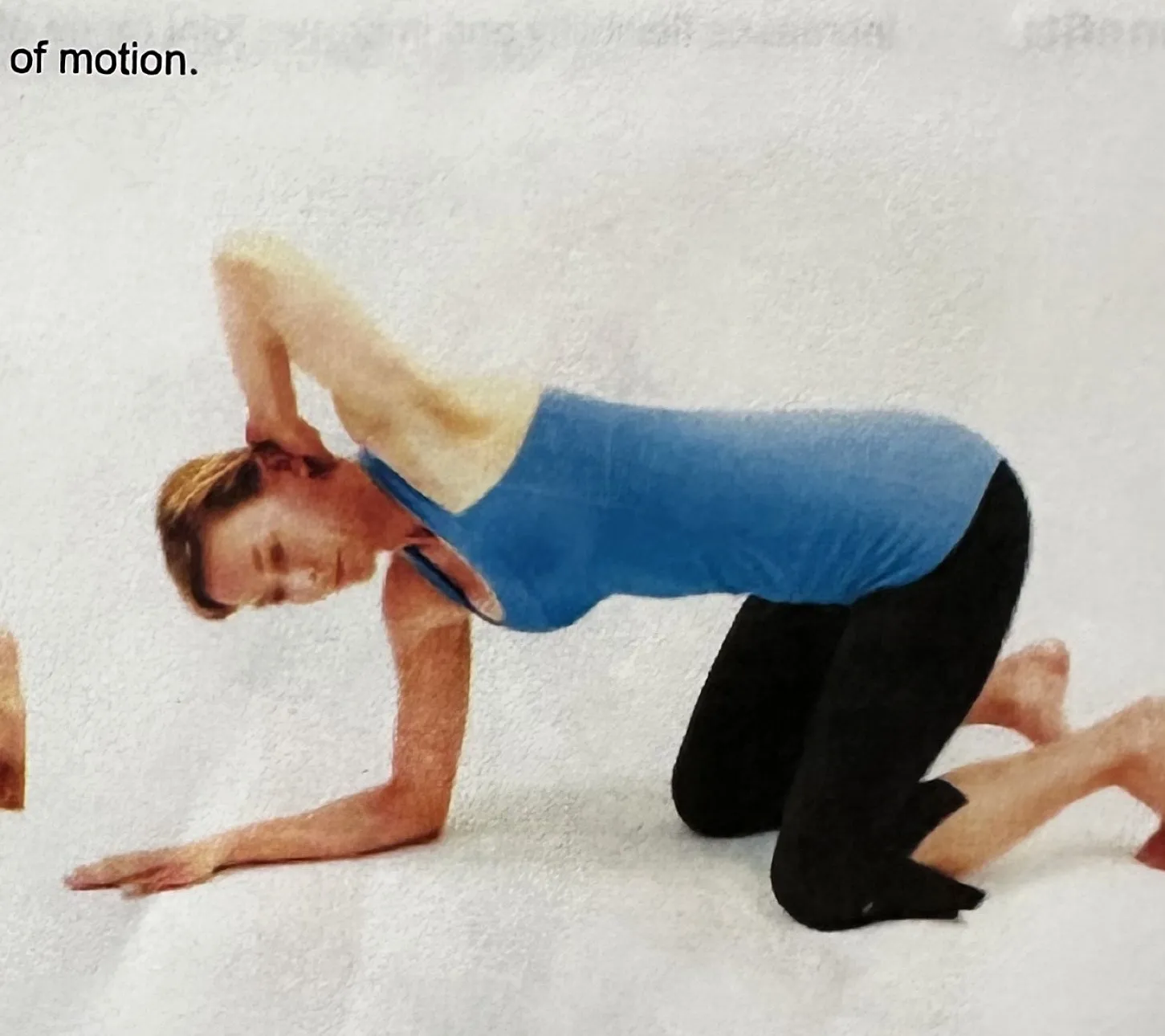
Starting position
Begin in the quadruped position with forearms flat on the floor and knees on floor below hips. Place your left hand on the back of the neck and flex your body towards the floor, bringing the left elbow towards the right hip.
Movement
Slowly lift the left elbow upwards, extending and rotating the body towards the high elbow. Repeat for the prescribed number of repetitions before switching sides.
If you experience an exacerbation or have a change in medical condition, promptly seek appropriate medical advice.
| Sets | Reps | Hold | Rest | Frequency |
|---|---|---|---|---|
| 3 | 10 | — | 30 sec | 3x/week |
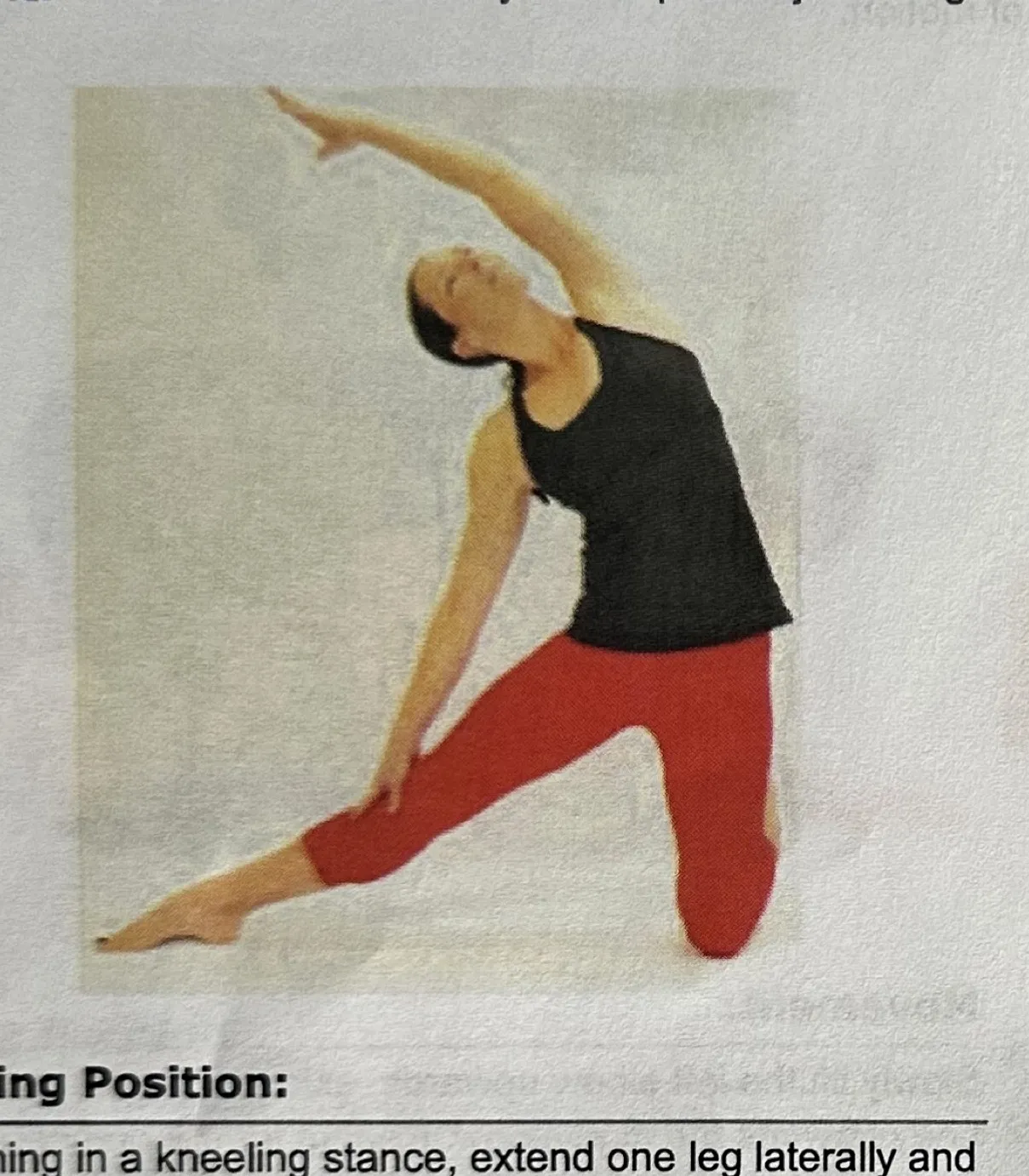
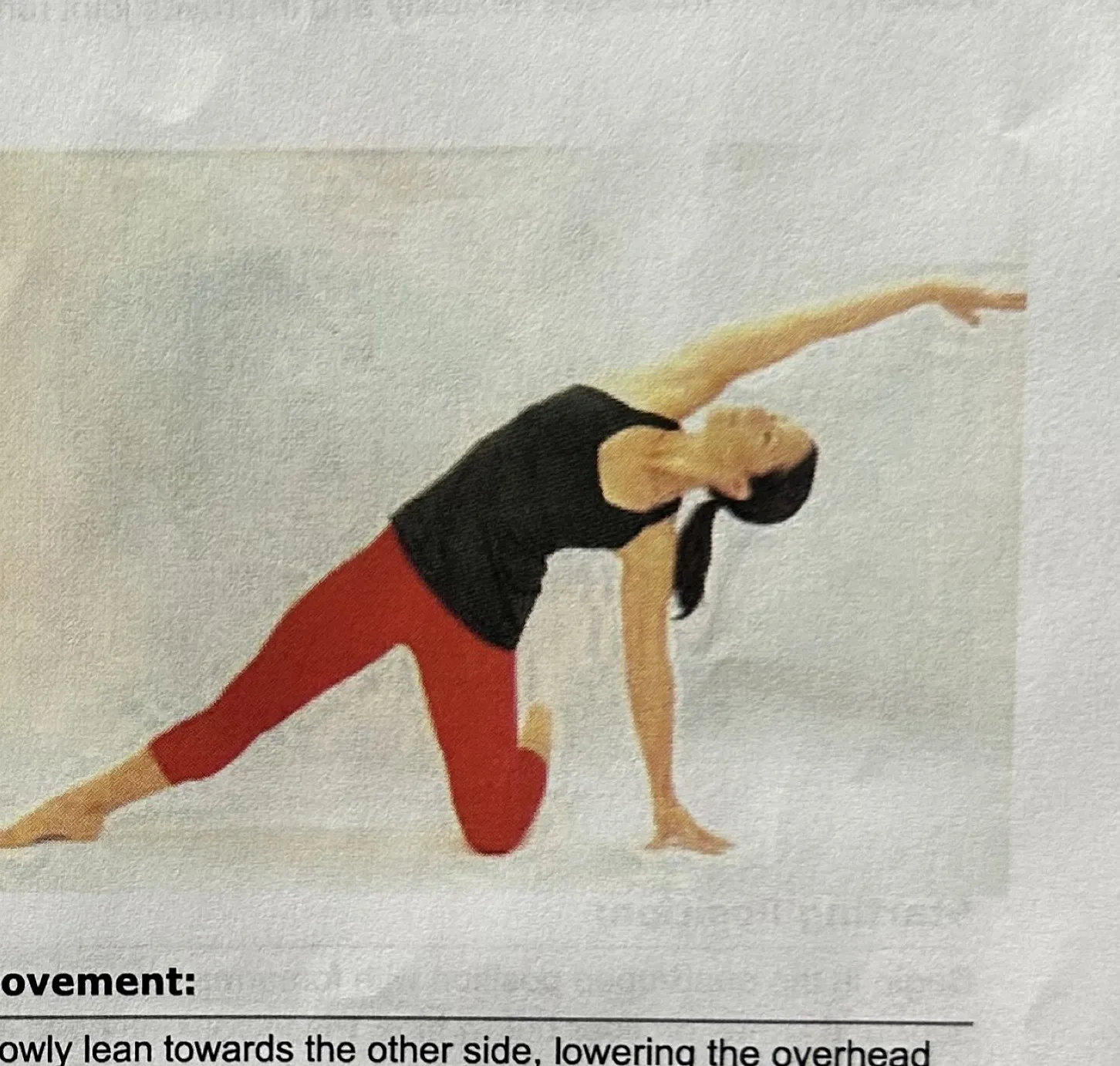
9. Gate Pose
Purpose: Correct imbalances and restore function.
Benefit: Increases flexibility and improves joint range of motion.
Starting position
Beginning in a kneeling stance, extend one leg laterally and rest the same side arm on that leg while extending the other arm overhead and leaning toward the side of the extended leg.
Movement
Slowly lean towards the other side, lowering the overhead arm to the floor and bringing the other arm overhead, now leaning towards the opposite side.
If you experience an exacerbation or have a change in medical condition, promptly seek appropriate medical advice.
| Sets | Reps | Hold | Rest | Frequency |
|---|---|---|---|---|
| 1 | 3 | 30 sec | — | Daily |
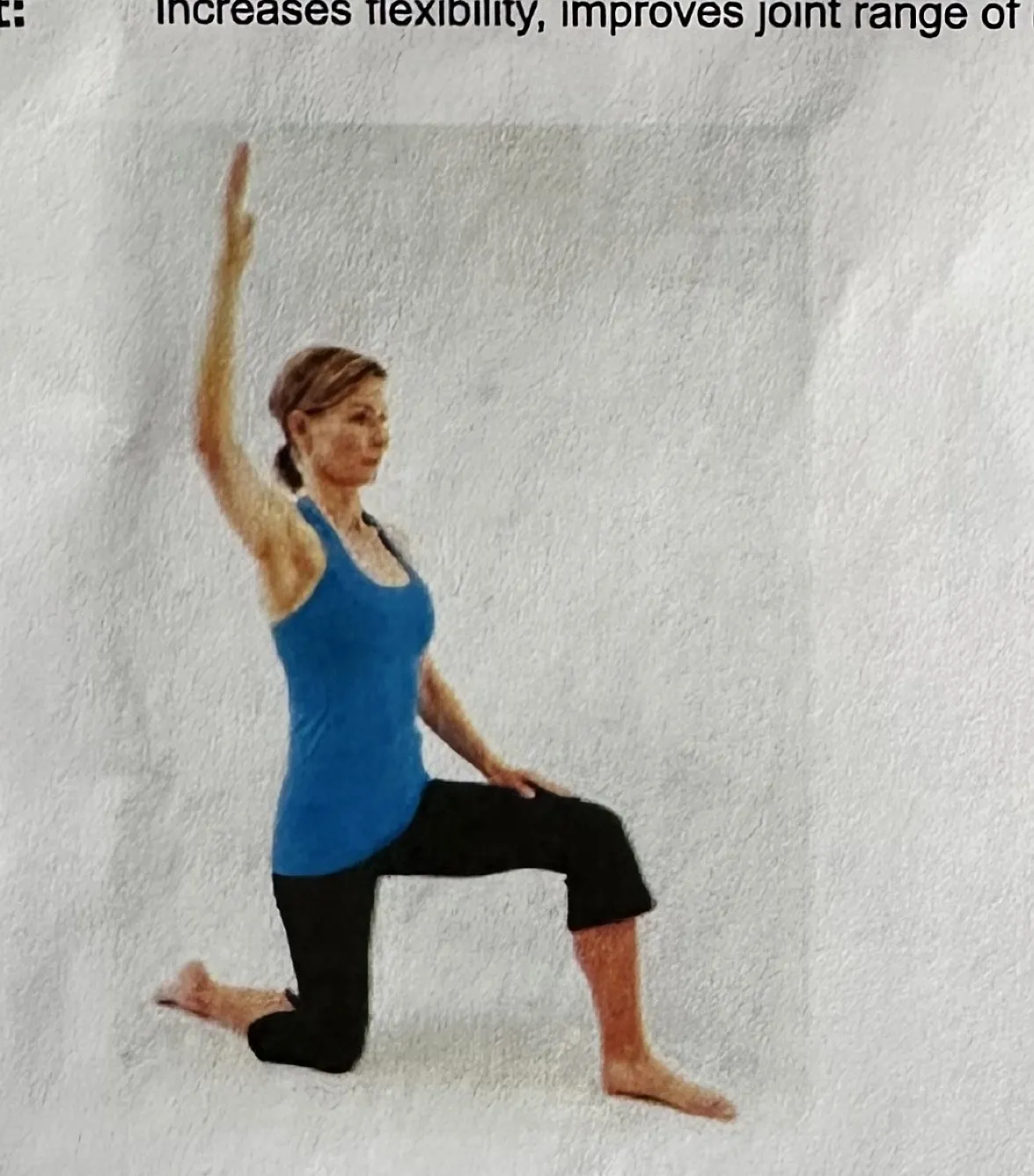
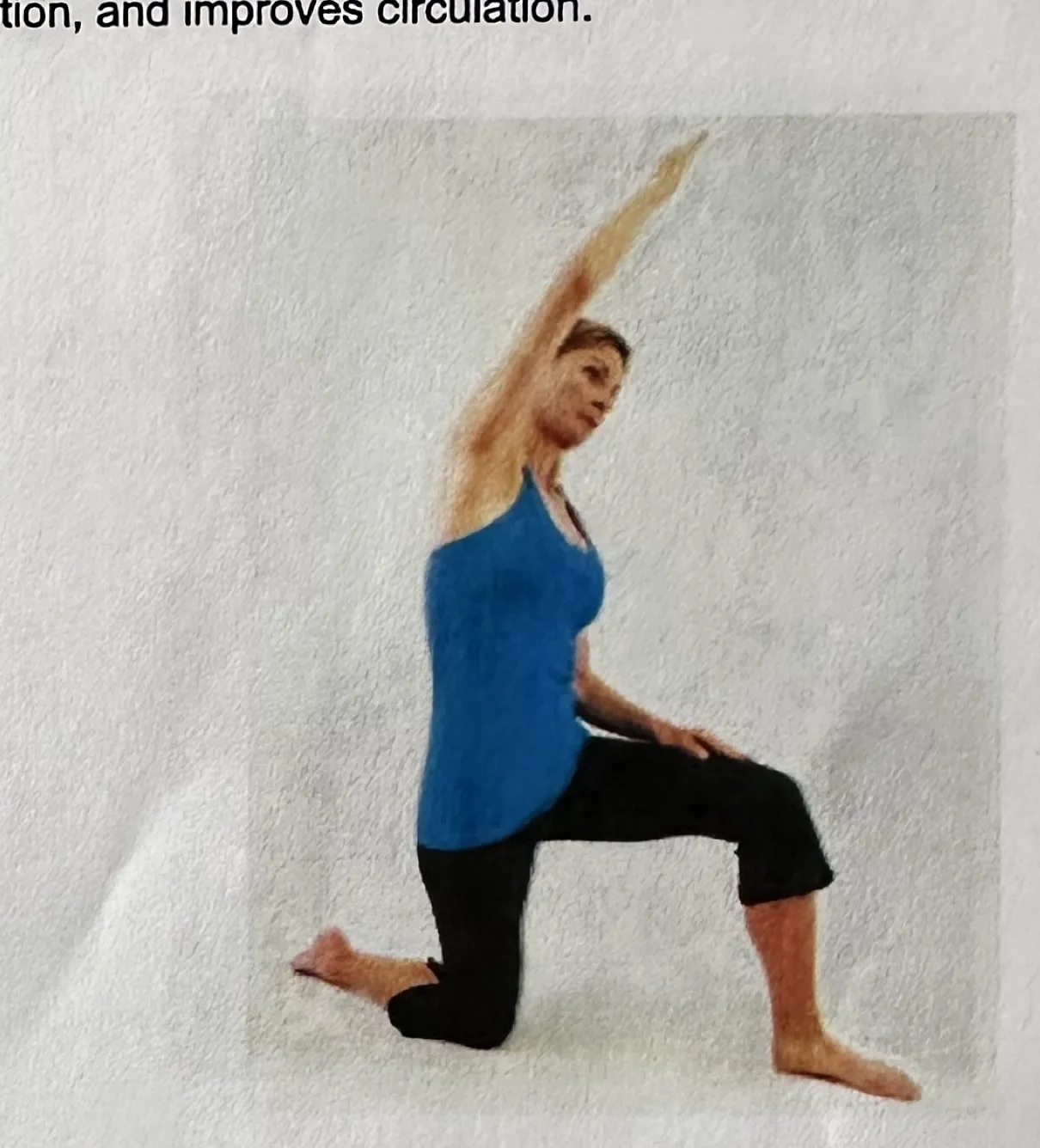
10. Kneeling Side Stretch
Purpose: Correct low back imbalances and restore function.
Benefit: Increases flexibility, improves joint range of motion, and improves circulation.
Starting position
Begin by positioning yourself in a kneeling position with one foot on the floor. Reach arm that is the same side as rear leg toward ceiling.
Movement
Slowly reach to side until gentle stretch is felt. Repeat for recommended repetitions and sets.
If you experience an exacerbation or have a change in medical condition, promptly seek appropriate medical advice.
| Sets | Reps | Hold | Rest | Frequency |
|---|---|---|---|---|
| 1 | 3 | 30 sec | — | Daily |
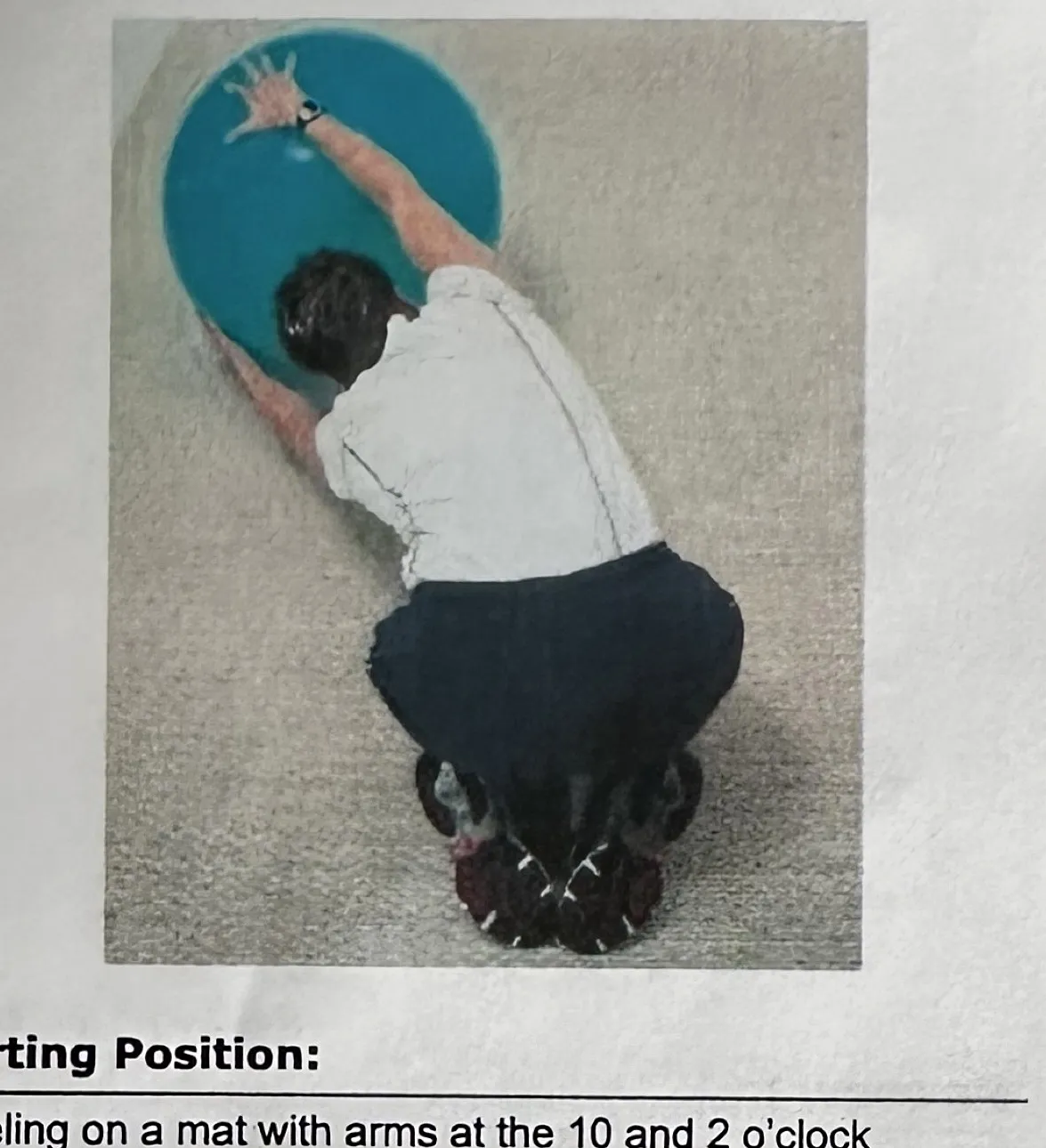
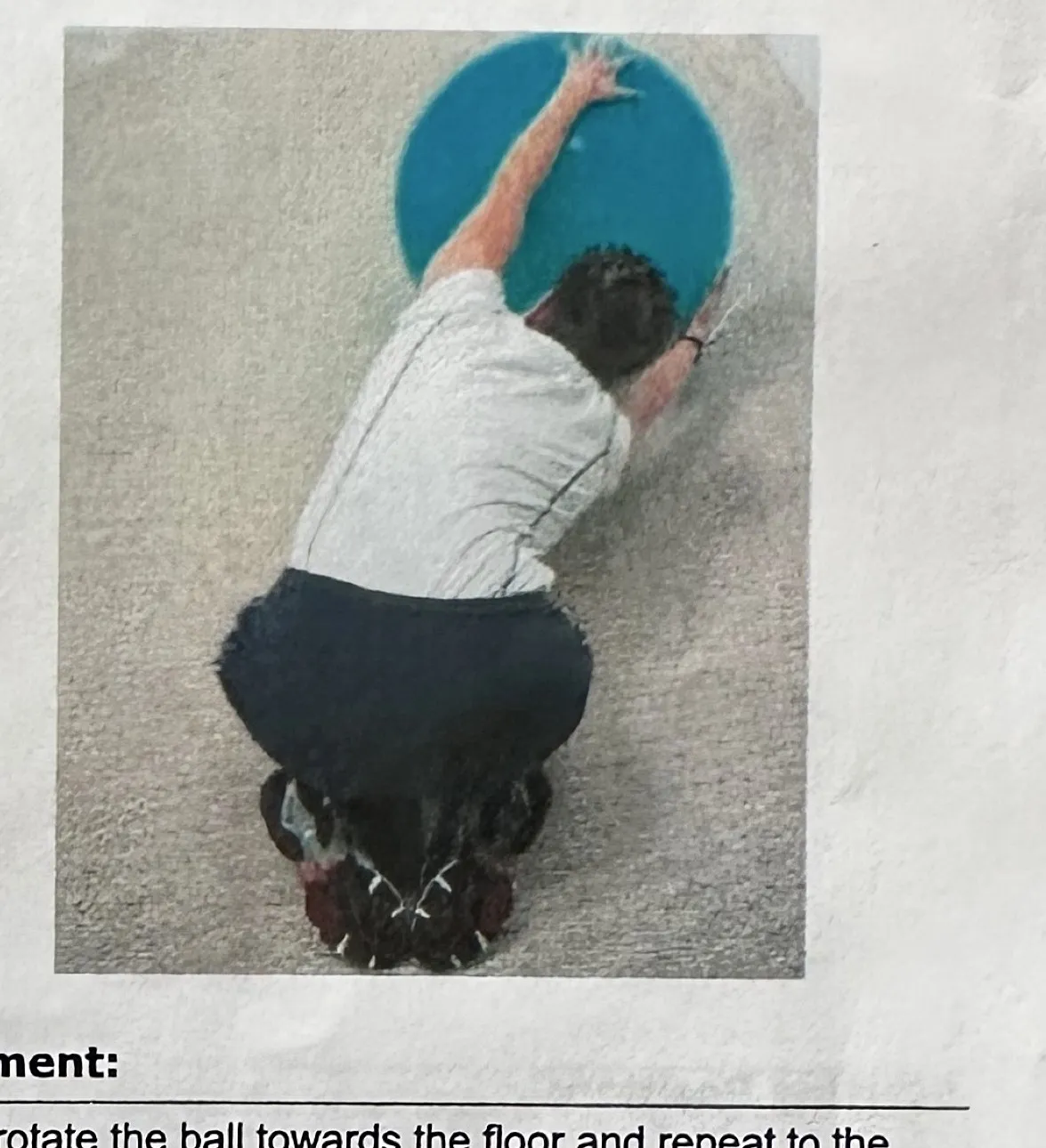
11. Stability Ball Kneeling Side Stretches with Twist
Purpose: Correct low back imbalances and restore function.
Benefit: Increases flexibility, improves joint range of motion, and improves circulation.
Starting position
Kneeling on a mat with arms at the 10 and 2 o’clock positions on the ball.
Movement
Slowly rotate the ball towards the floor and repeat to the opposite direction.
If you experience an exacerbation or have a change in medical condition, promptly seek appropriate medical advice.
| Sets | Reps | Hold | Rest | Frequency |
|---|---|---|---|---|
| 1 | 3 | 30 sec | — | Daily |
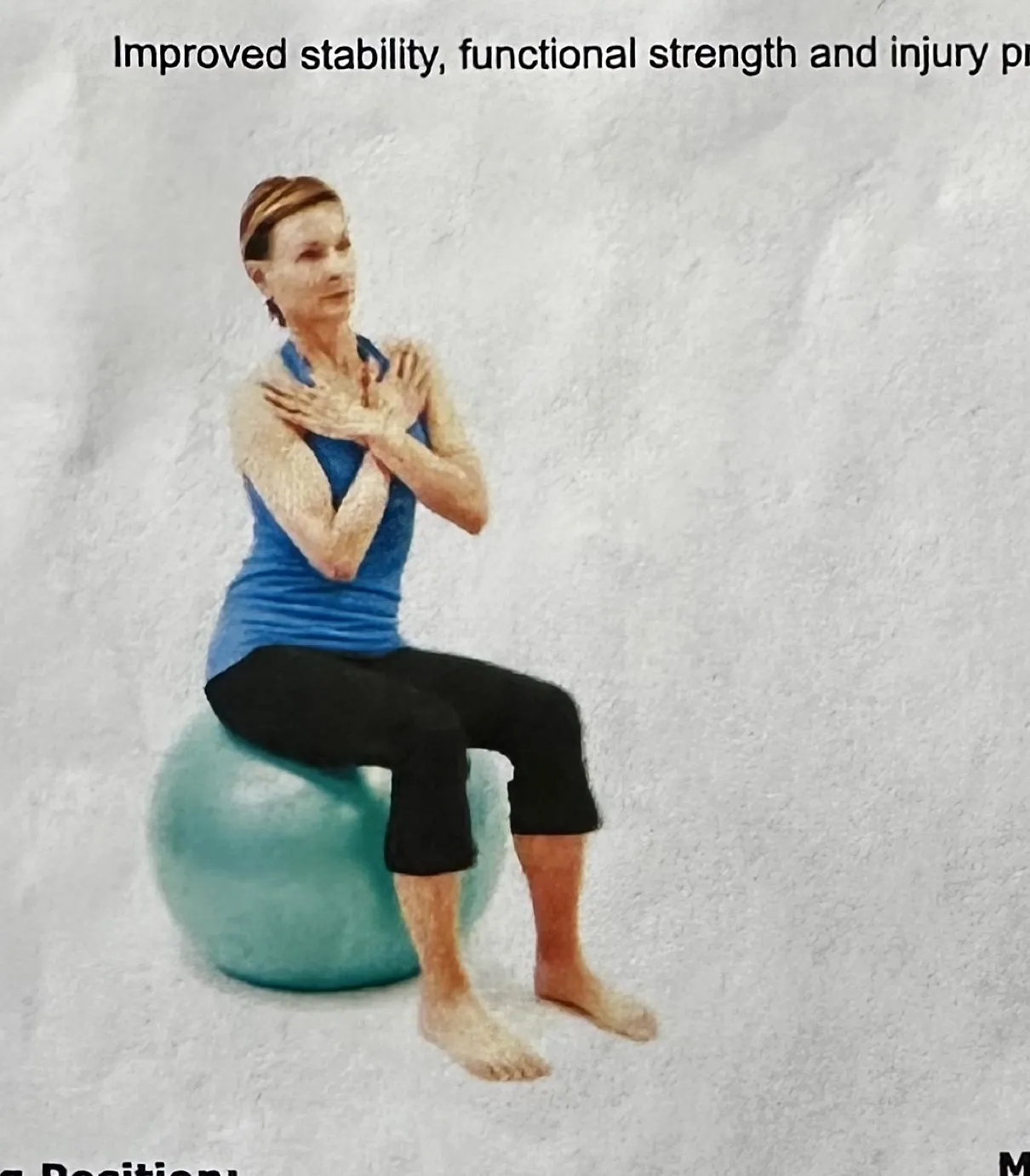
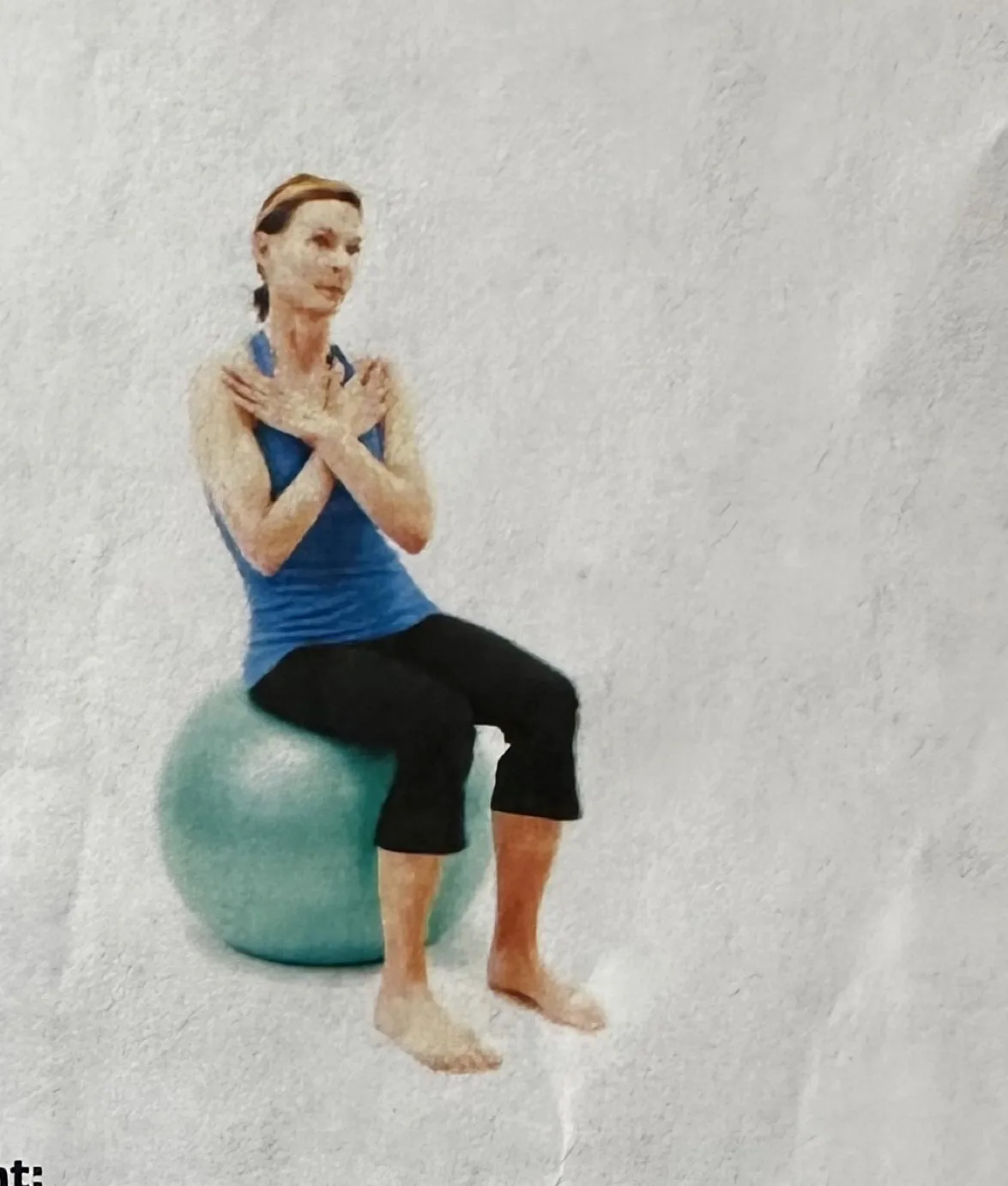
12. Side-to-Side Lumbo Pelvic Rock
Purpose: Increase low back strength and muscular endurance.
Benefit: Improved stability, functional strength and injury prevention.
Starting position
Begin sitting on stability ball with feet flat on the floor. Sit upright with slight arch in the low back. Cross arms, placing hands on shoulders or extended for balance.
Movement
Activate core muscles. Slowly shift body weight to one side, rolling onto one hip followed by a weight shift and roll to opposite hip. Continue to alternate sides for prescribed repetitions and sets.
If you experience an exacerbation or have a change in medical condition, promptly seek appropriate medical advice.
| Sets | Reps | Hold | Rest | Frequency |
|---|---|---|---|---|
| 3 | 10 | — | 30 sec | 3x/week |